

Engelbrecht Grills and Cookers
Best Wood-Fired Grills: The Complete Buyer's Guide
Real hardwood fires, adjustable cooking grates, heavy-duty construction, and the difference between traditional wood-burning grills and pellet grills.
Wood-fired cooking is one of the oldest and most rewarding ways to prepare food. Yet searching for the best wood-fired grills often returns pellet grills, automated smokers, and outdoor cooking appliances that use wood in very different ways. All can produce excellent food, but they are not the same equipment.
At Engelbrecht Grills and Cookers, we specialize in equipment built around actual hardwood fires. This guide explains the types of wood-fired grills, how design affects cooking performance, and what matters when purchasing a premium grill.
What is a True Wood-Fired Grill?
A traditional wood-fired grill is designed to burn natural hardwood logs, wood embers, or charcoal—including lump charcoal—as its primary heat source. Unlike most pellet grills, which burn compressed wood pellets in a controlled combustion chamber, a log-burning grill allows the cook to manage the fire directly.
- A firebox or coal-support system built for direct hardwood combustion
- A cooking surface above or beside the fire
- Manual control of fuel, airflow, cooking height, or coal placement
- Cooking using radiant heat from embers
- Construction appropriate for repeated intense heat
The important distinction is not whether a grill uses wood, but how it burns that wood and how the cook controls the heat.
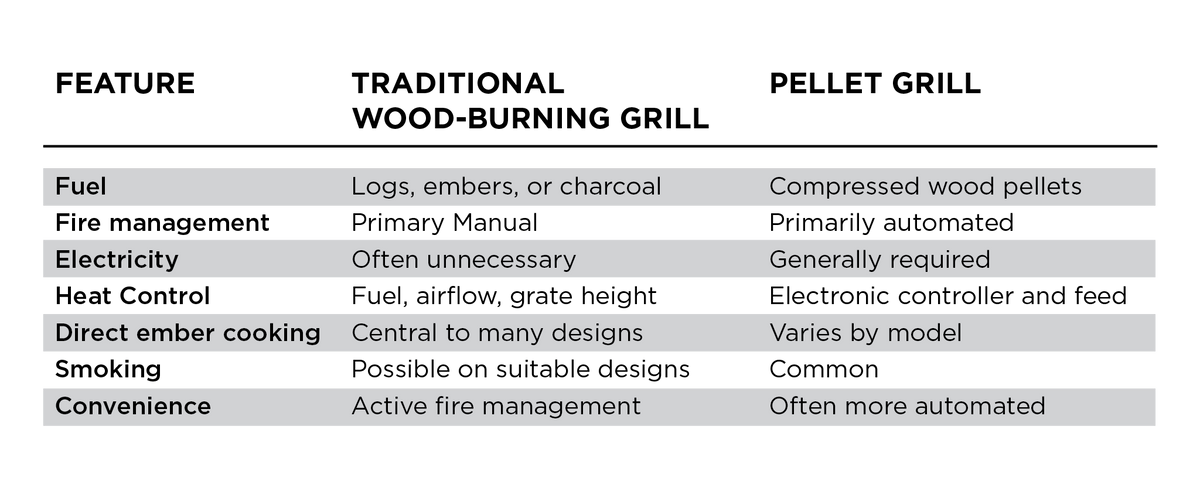
Pellet grills are engineered for consistency and convenience through automated fuel delivery and temperature regulation. A traditional whole-log grill gives the cook direct control over combustion, heat, and smoke. Both can produce excellent food, but the difference is not simply the quality of one finished meal: it is the range of cooking outcomes a skilled operator can deliberately create.
Why a Whole-Log Hardwood Fire Creates a Different Cooking Environment
A whole-log hardwood fire and a pellet grill do more than burn different forms of wood. They can create substantially different heat, airflow, moisture, and smoke-exposure conditions around food. These differences help explain why live-fire cooks value whole logs and an established ember bed for searing, surface charring, and developing bark.
Radiant Heat, Temperature, and Searing
A substantial bed of hardwood embers can deliver intense radiant energy directly to the cooking surface. When a grill permits food to be positioned close to those embers, that energy promotes rapid browning and searing. The ability to raise and lower the cooking grate provides another way to control that intensity. Many pellet grills are designed primarily around indirect, fan-driven heat, although some models include direct-flame or high-temperature searing features. Neither fuel type alone determines the maximum cooking temperature: grill geometry, airflow, grate position, and design all matter.
Char, Browning, and Bark
Strong radiant heat can create pronounced browning and localized char on grilled meats. On longer cooks, bark develops through a combination of surface drying, seasoning, smoke deposition, heat-driven browning, and time. Whole-log fires can offer a broad range of radiant and convective cooking conditions that skilled cooks use to influence those results. More char is not automatically better: excessive charring can introduce bitterness, and good bark is not simply a burnt exterior.
Humidity and the Cooking Chamber
Burning wood releases water vapor, and the moisture inside a cooker also comes from the food itself. Chamber humidity depends on fuel moisture, combustion, airflow, ventilation, cooking temperature, and the amount of food being cooked. A whole-log cooker and a pellet cooker may therefore have different humidity profiles, but neither is inherently more humid in all circumstances. Humidity and airflow influence evaporation from the food surface, which in turn affects cooling, browning, and bark formation.
Smoke Chemistry and Flavor Development
Smoke flavor is produced by a complex mixture of compounds released during wood combustion. The composition and concentration of those compounds change with wood species, fuel size and moisture, combustion temperature, oxygen supply, and how long food is exposed. Pellet grills often burn small quantities of fuel in a controlled, relatively efficient fire; under some operating conditions this can produce a lighter smoke character than a carefully managed whole-log fire. A whole-log fire can also provide a broader range of combustion conditions and smoke exposure as logs ignite and mature into embers. That does not mean a smoky, oxygen-starved fire is desirable: thick, dirty smoke can cause harsh or bitter flavors. Clean, well-managed combustion remains essential in both systems.
How Whole-Log Hardwood Cooking Influences Flavor and Texture
The difference between a whole-log grill and a pellet grill becomes most meaningful at the table. Smoke character, seared crust, bark, and the contrast between a browned exterior and juicy interior are influenced by the way heat and smoke reach the food. These are tendencies shaped by cooker design and technique—not guaranteed outcomes from the fuel alone.
Smoke Flavor: The Character of the Fire
Wood smoke contains aromatic compounds, including phenols, carbonyls, and organic acids, whose proportions depend on wood species, fuel moisture, combustion temperature, oxygen supply, and exposure time. Many conventional pellet grills burn small amounts of fuel in a controlled, fan-assisted fire. Under some conditions this produces a comparatively mild smoke profile. A properly managed whole-log fire moves through ignition, active flaming, and ember stages, potentially creating a different smoke character and exposure pattern. More visible smoke is not necessarily better: oxygen-starved, dirty combustion can leave harsh or bitter flavors.
Crust and Sear: Flavor Created by Radiant Heat
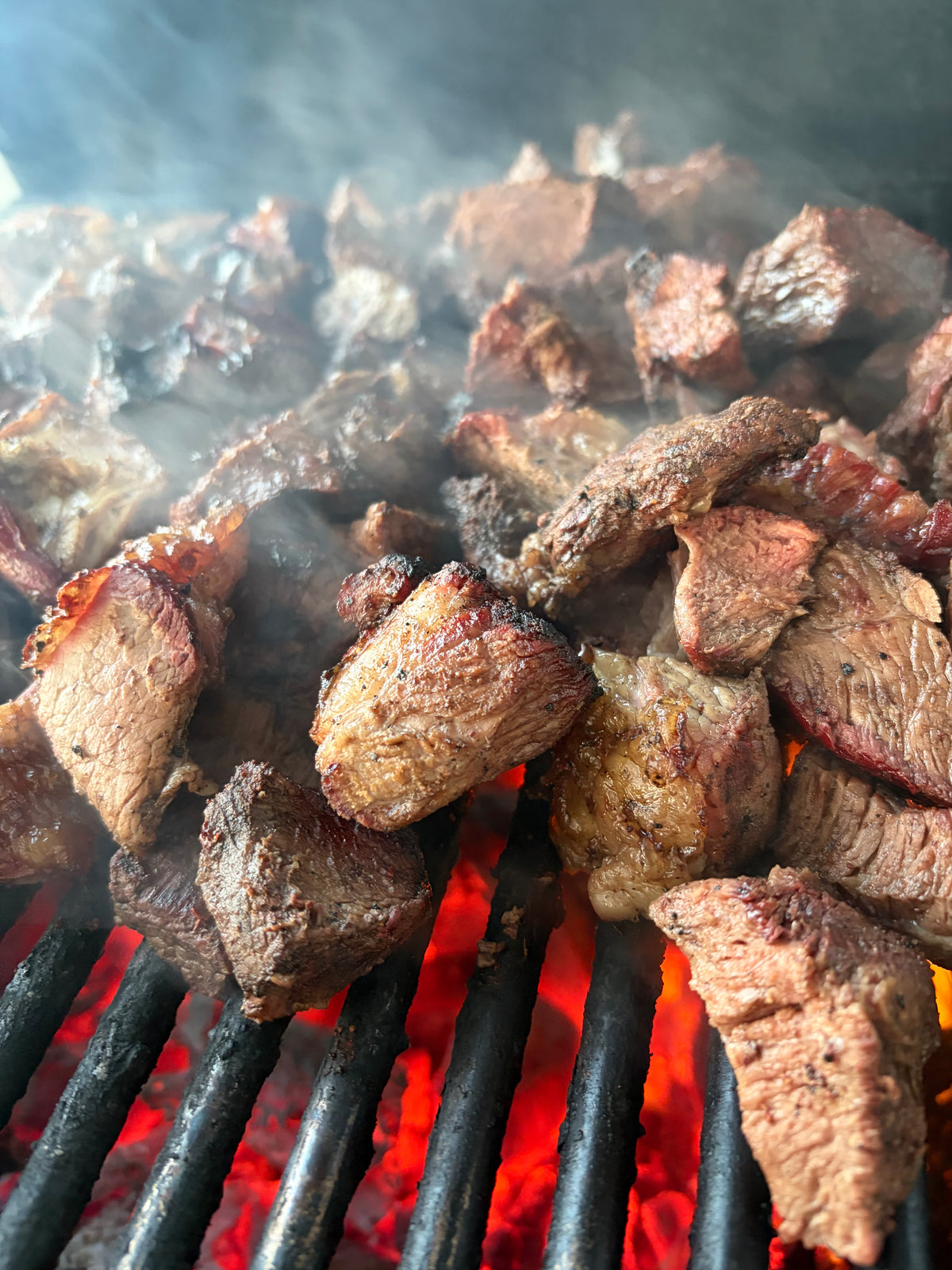
An established bed of hardwood coals can deliver intense radiant energy. When the cooking grate is positioned close to the embers, the meat surface can dry and brown rapidly, developing roasted flavors through Maillard reactions and, at higher intensities, localized char. The adjustable-height grate on the Engelbrecht Original Braten 1000 lets the cook change that exposure without rebuilding the fire. Some pellet grills also offer direct-flame searing; the difference is the means of applying and controlling heat, not an absolute inability to brown food.
Bark and Bite: The Texture of Slow-Cooked Barbecue
Bark develops as surface moisture evaporates, seasonings concentrate, smoke compounds deposit, and heat transforms the outer layers of meat. A well-developed bark offers a firmer, flavorful exterior against a tender interior. Fire management, airflow, chamber temperature, and smoke exposure can all affect that result. Whole-log smokers allow active adjustment of those variables; pellet grills can also produce excellent bark, though their fan-driven airflow and combustion patterns may lead to different results.
Juiciness, Humidity, and Surface Drying
Air movement and humidity influence how quickly moisture leaves the surface. Faster evaporation can promote bark development while also cooling the meat surface. Neither whole-log nor pellet cookers are inherently more humid or guaranteed to produce juicier food. Meat selection, internal finishing temperature, resting, cooking duration, and the particular cooker all matter. The goal is to balance surface texture with tenderness and moisture inside.
What Engelbrecht Customers Report
Engelbrecht customers and people comparing cooking methods have described a preference for the smoke flavor, bark, and char achievable with a whole-log fire. Those observations are useful firsthand feedback, but they are not controlled comparative test results. The strongest claim is that a purpose-built whole-log cooker gives the cook a distinct set of tools for shaping flavor and texture—not that every pellet grill produces inferior food.
In short: the meaningful difference is not simply wood logs versus wood pellets. It is how the fire, radiant heat, smoke, airflow, and operator control come together to shape the food.