

Engelbrecht Grills and Cookers
Best Wood-Fired Grills: The Complete Buyer's Guide
Real hardwood fires, adjustable cooking grates, heavy-duty construction, and the difference between traditional wood-burning grills and pellet grills.
Wood-fired cooking is one of the oldest and most rewarding ways to prepare food. Yet searching for the best wood-fired grills often returns pellet grills, automated smokers, and outdoor cooking appliances that use wood in very different ways. All can produce excellent food, but they are not the same equipment.
At Engelbrecht Grills and Cookers, we specialize in equipment built around actual hardwood fires. This guide explains the types of wood-fired grills, how design affects cooking performance, and what matters when purchasing a premium grill.
Designed and manufactured in Illinois, Engelbrecht Grills specialized in heavy-duty wood-burning grills engineered for traditional hardwood fires, adjustable cooking heights, and versatile live fire cooking.
What is a True Wood-Fired Grill?
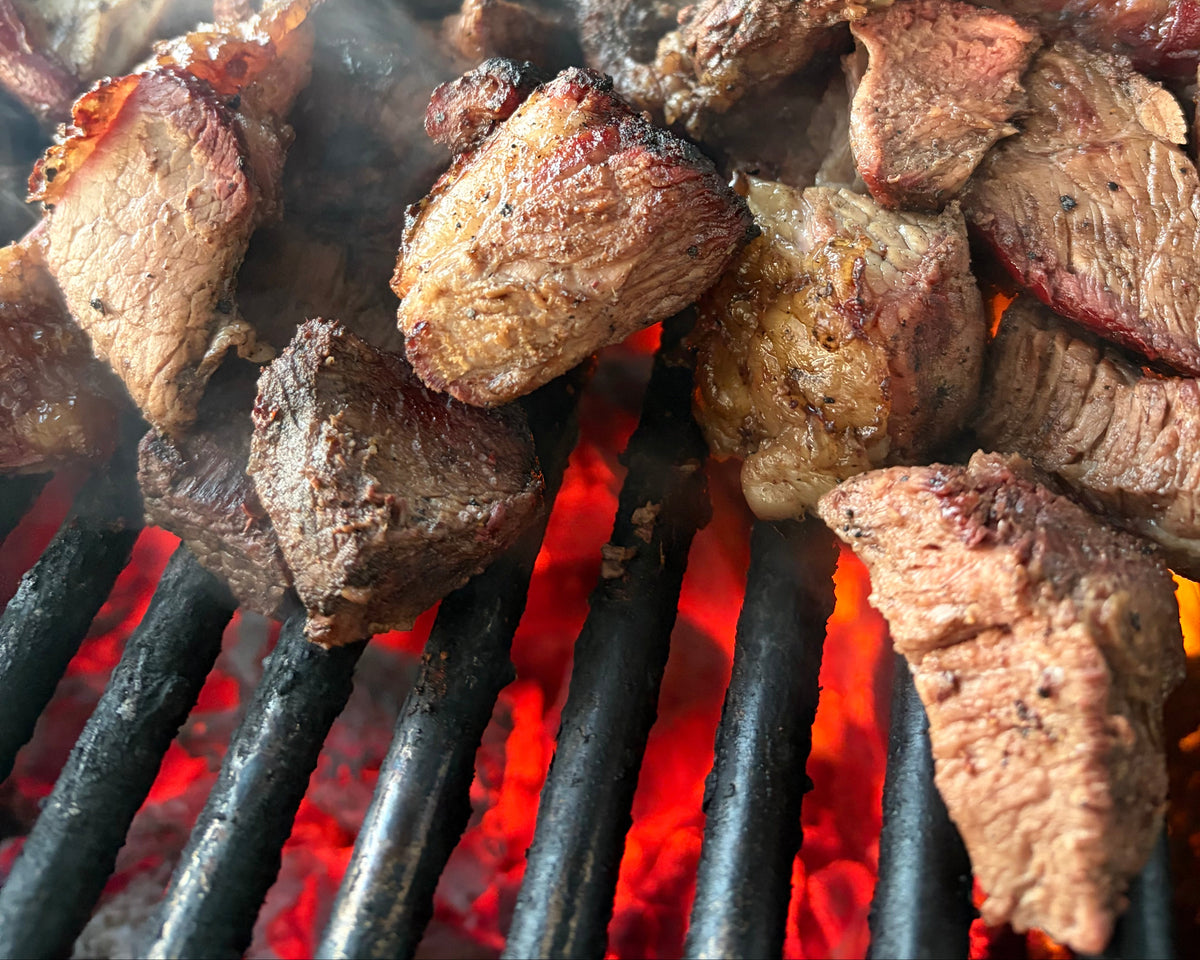
A traditional wood-fired grill is designed to burn natural hardwood logs, wood embers, or charcoal—including lump charcoal—as its primary heat source. Unlike most pellet grills, which burn compressed wood pellets in a controlled combustion chamber, a log-burning grill allows the cook to manage the fire directly.
- A firebox or coal-support system built for direct hardwood combustion
- A cooking surface above or beside the fire
- Manual control of fuel, airflow, cooking height, or coal placement
- Cooking using radiant heat from embers
- Construction appropriate for repeated intense heat
The important distinction is not whether a grill uses wood, but how it burns that wood and how the cook controls the heat.
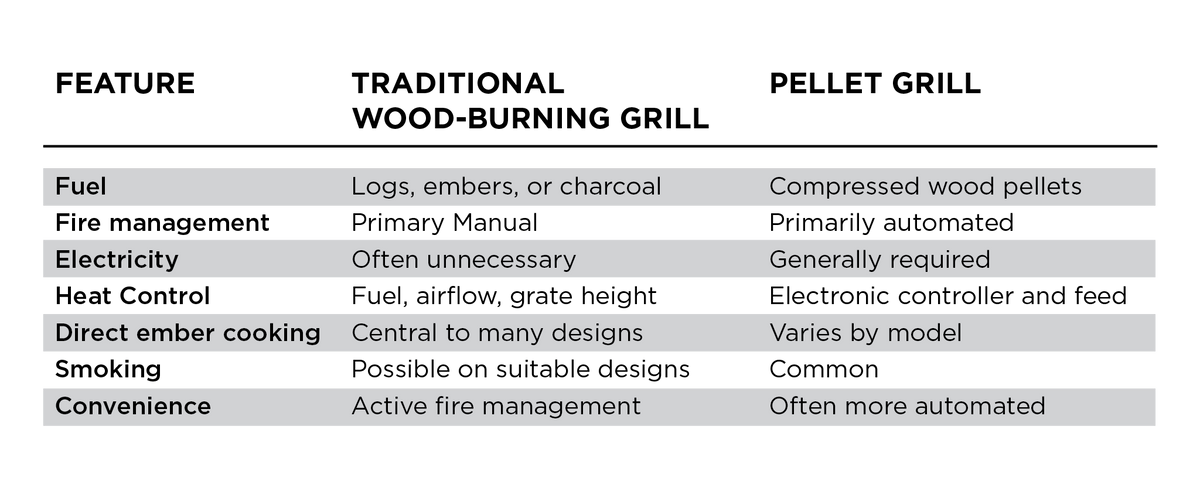
Pellet grills are engineered for consistency and convenience through automated fuel delivery and temperature regulation. A traditional whole-log grill gives the cook direct control over combustion, heat, and smoke. Both can produce excellent food, but the difference is not simply the quality of one finished meal: it is the range of cooking outcomes a skilled operator can deliberately create.
Why a Whole-Log Hardwood Fire Creates a Different Cooking Environment
A whole-log hardwood fire and a pellet grill do more than burn different forms of wood. They can create substantially different heat, airflow, moisture, and smoke-exposure conditions around food. These differences help explain why live-fire cooks value whole logs and an established ember bed for searing, surface charring, and developing bark.
Radiant Heat, Temperature, and Searing
A substantial bed of hardwood embers can deliver intense radiant energy directly to the cooking surface. When a grill permits food to be positioned close to those embers, that energy promotes rapid browning and searing. The ability to raise and lower the cooking grate provides another way to control that intensity. Many pellet grills are designed primarily around indirect, fan-driven heat, although some models include direct-flame or high-temperature searing features. Neither fuel type alone determines the maximum cooking temperature: grill geometry, airflow, grate position, and design all matter.
Char, Browning, and Bark
Strong radiant heat can create pronounced browning and localized char on grilled meats. On longer cooks, bark develops through a combination of surface drying, seasoning, smoke deposition, heat-driven browning, and time. Whole-log fires can offer a broad range of radiant and convective cooking conditions that skilled cooks use to influence those results. More char is not automatically better: excessive charring can introduce bitterness, and good bark is not simply a burnt exterior.
Humidity and the Cooking Chamber
Burning wood releases water vapor, and the moisture inside a cooker also comes from the food itself. Chamber humidity depends on fuel moisture, combustion, airflow, ventilation, cooking temperature, and the amount of food being cooked. A whole-log cooker and a pellet cooker may therefore have different humidity profiles, but neither is inherently more humid in all circumstances. Humidity and airflow influence evaporation from the food surface, which in turn affects cooling, browning, and bark formation.
Smoke Chemistry and Flavor Development
Smoke flavor is produced by a complex mixture of compounds released during wood combustion. The composition and concentration of those compounds change with wood species, fuel size and moisture, combustion temperature, oxygen supply, and how long food is exposed. Pellet grills often burn small quantities of fuel in a controlled, relatively efficient fire; under some operating conditions this can produce a lighter smoke character than a carefully managed whole-log fire. A whole-log fire can also provide a broader range of combustion conditions and smoke exposure as logs ignite and mature into embers. That does not mean a smoky, oxygen-starved fire is desirable: thick, dirty smoke can cause harsh or bitter flavors. Clean, well-managed combustion remains essential in both systems.
How Whole-Log Hardwood Cooking Influences Flavor and Texture
The difference between a whole-log grill and a pellet grill becomes most meaningful at the table. Smoke character, seared crust, bark, and the contrast between a browned exterior and juicy interior are influenced by the way heat and smoke reach the food. These are tendencies shaped by cooker design and technique—not guaranteed outcomes from the fuel alone.
Smoke Flavor: The Character of the Fire
Wood smoke contains aromatic compounds, including phenols, carbonyls, and organic acids, whose proportions depend on wood species, fuel moisture, combustion temperature, oxygen supply, and exposure time. Many conventional pellet grills burn small amounts of fuel in a controlled, fan-assisted fire. Under some conditions this produces a comparatively mild smoke profile. A properly managed whole-log fire moves through ignition, active flaming, and ember stages, potentially creating a different smoke character and exposure pattern. More visible smoke is not necessarily better: oxygen-starved, dirty combustion can leave harsh or bitter flavors.
Crust and Sear: Flavor Created by Radiant Heat
An established bed of hardwood coals can deliver intense radiant energy. When the cooking grate is positioned close to the embers, the meat surface can dry and brown rapidly, developing roasted flavors through Maillard reactions and, at higher intensities, localized char. The adjustable-height grate on the Engelbrecht Original Braten 1000 lets the cook change that exposure without rebuilding the fire. Some pellet grills also offer direct-flame searing; the difference is the means of applying and controlling heat, not an absolute inability to brown food.
Bark and Bite: The Texture of Slow-Cooked Barbecue
Bark develops as surface moisture evaporates, seasonings concentrate, smoke compounds deposit, and heat transforms the outer layers of meat. A well-developed bark offers a firmer, flavorful exterior against a tender interior. Fire management, airflow, chamber temperature, and smoke exposure can all affect that result. Whole-log smokers allow active adjustment of those variables; pellet grills can also produce excellent bark, though their fan-driven airflow and combustion patterns may lead to different results.
Juiciness, Humidity, and Surface Drying
Air movement and humidity influence how quickly moisture leaves the surface. Faster evaporation can promote bark development while also cooling the meat surface. Neither whole-log nor pellet cookers are inherently more humid or guaranteed to produce juicier food. Meat selection, internal finishing temperature, resting, cooking duration, and the particular cooker all matter. The goal is to balance surface texture with tenderness and moisture inside.
What Engelbrecht Customers Report
Engelbrecht customers and people comparing cooking methods have described a preference for the smoke flavor, bark, and char achievable with a whole-log fire. Those observations are useful firsthand feedback, but they are not controlled comparative test results. The strongest claim is that a purpose-built whole-log cooker gives the cook a distinct set of tools for shaping flavor and texture—not that every pellet grill produces inferior food.
In short: the meaningful difference is not simply wood logs versus wood pellets. It is how the fire, radiant heat, smoke, airflow, and operator control come together to shape the food.
How does someone develop the art of wood-fire cooking? Start with a well-built grill, good seasoned hardwood or quality lump charcoal, and a willingness to experiment. Build a fire, learn how the logs become coals, and pay attention to how changing fuel placement, airflow, grate height, and cooking time changes the food. Cook familiar dishes repeatedly, adjusting one element at a time. Taste the results, notice what worked, and try again.
With practice, fire management becomes less about following a fixed setting and more about developing a feel for the heat, smoke, and food. Consistency means being able to reproduce a result; mastery means understanding the variables well enough to reproduce that result or deliberately create something different. Automated pellet grills and briquette fires can offer valuable consistency, but a live hardwood fire gives the cook additional opportunities for personal expression. The goal is to gain the skill and confidence to create the flavor, sear, bark, and texture you want. Gather good fuel, use the grill, experiment, and enjoy the process.
What This Means for the Cook
A pellet grill is engineered to deliver consistency through automation. A traditional whole-log grill puts combustion, heat, and smoke directly into the hands of the cook. By managing flame, embers, fuel placement, airflow, and cooking height, an experienced cook can deliberately shape smoke character, sear, char, bark, and texture. This is not a claim that every wood-fired meal is superior, or that pellet-grill cooks lack skill. It is a distinction in the degree and kind of control the equipment makes available. The meaningful comparison is the complete cooking environment—not simply whether both appliances use wood as fuel.
Technical background: USDA Food Safety and Inspection Service guidance on safe cooking temperatures; Harold McGee, On Food and Cooking (revised edition), on browning and smoke; and the AmazingRibs educational articles on smoke, bark, and combustion. These explain the underlying cooking science rather than establishing that any single fuel format always tastes better.
What Makes a Great Wood-Fired Grill?
1. Steel Construction and Heat Resistance
Burning hardwood creates intense and uneven temperatures. Examine firebox thickness, coal supports, welded joints, and resistance to repeated heating and cooling. Thicker steel can increase thermal mass and resistance to deformation, but overall design and reinforcement also matter. The Original Braten 1000 uses a 10-gauge steel body and 3/8-inch steel coal grates.
2. Adjustable Cooking Height
Raising or lowering the cooking grate changes its distance from the embers and therefore the radiant heat received by food. This is particularly useful for steaks, chicken, and vegetables. The Braten 1000 uses a cable-operated adjustable grate.
3. Direct and Indirect Cooking
Direct cooking places food above the primary heat source; indirect cooking moves food away from the most intense heat. Open grills excel at direct ember cooking. Enclosed chambers and offset fireboxes add roasting and smoking possibilities. Suitability depends on the particular design.
4. Cooking Grate Design
Round stainless rods, expanded metal, cast iron, and V-shaped grates each offer different cooking and cleaning characteristics. V-shaped Argentine-style grates can channel some drippings away from the fire and reduce certain grease-related flare-ups.
5. Long-Term Serviceability
Evaluate replaceable grates, moving components, lift mechanisms, hinges, wheels, parts availability, and manufacturer support. Durability is a property of the complete assembly, not simply its steel thickness.
Insights From the Manufacturer: Steel and Fire Management
At Engelbrecht, construction is evaluated for repeated exposure to concentrated hardwood heat, not just a nominal metal thickness. Steel thickness, heat conduction, reinforcement, and the placement of hot spots all affect durability. Greater thermal mass can moderate rapid temperature changes, but it also takes energy and time to heat; the best design balances durability, response, and usable cooking performance.
On suitable Engelbrecht enclosed cookers, upper and lower dampers regulate airflow through the fire. Once an operator learns the cooker, careful fuel loading and airflow management can support extended burns, much as a wood-burning stove is regulated. Burn duration depends on fuel, load, draft, weather, and cooking temperature; the cooker is not an unattended appliance.
Engelbrecht grills are manufactured primarily in Paxton, Illinois, with components also produced in Indiana, Pennsylvania, and elsewhere in Illinois. Specific sourcing may vary by model.
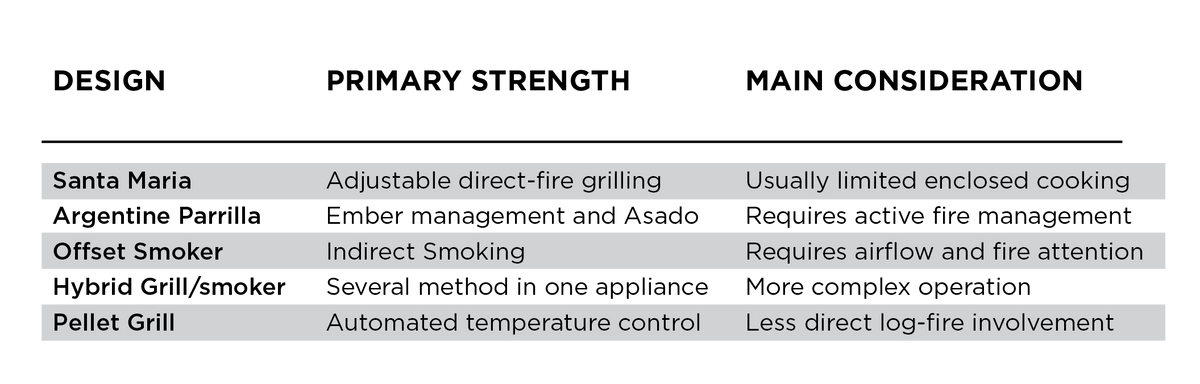
Understanding Wood-Fired Grill Types
Santa Maria Grills
Associated with California Central Coast barbecue, these typically feature an open cooking surface and a height-adjustable grate over wood or charcoal. They excel at steaks, tri-tip, vegetables, and direct radiant-heat cooking.
Argentine Parrilla Grills
Argentine parrillas emphasize hardwood embers and carefully controlled heat. Some feature V-shaped grates and a brasero, a separate area where wood is burned into embers before being transferred beneath the cooking surface.
Offset Wood-Burning Smokers
An offset smoker has a separate firebox connected to the cooking chamber. Heat and smoke travel through the chamber, supporting indirect cooking for brisket, ribs, pork shoulder, and other barbecue.
Hybrid Grill and Smoker Designs
Hybrids combine features such as adjustable direct-fire grates, enclosed chambers, and offset fireboxes. The Engelbrecht Original Braten 1000 is one example of this approach.
Comparing
Wood-Fired Grill Designs
Understanding Traditional Argentine Fire Management
What is a Brasero Grill?
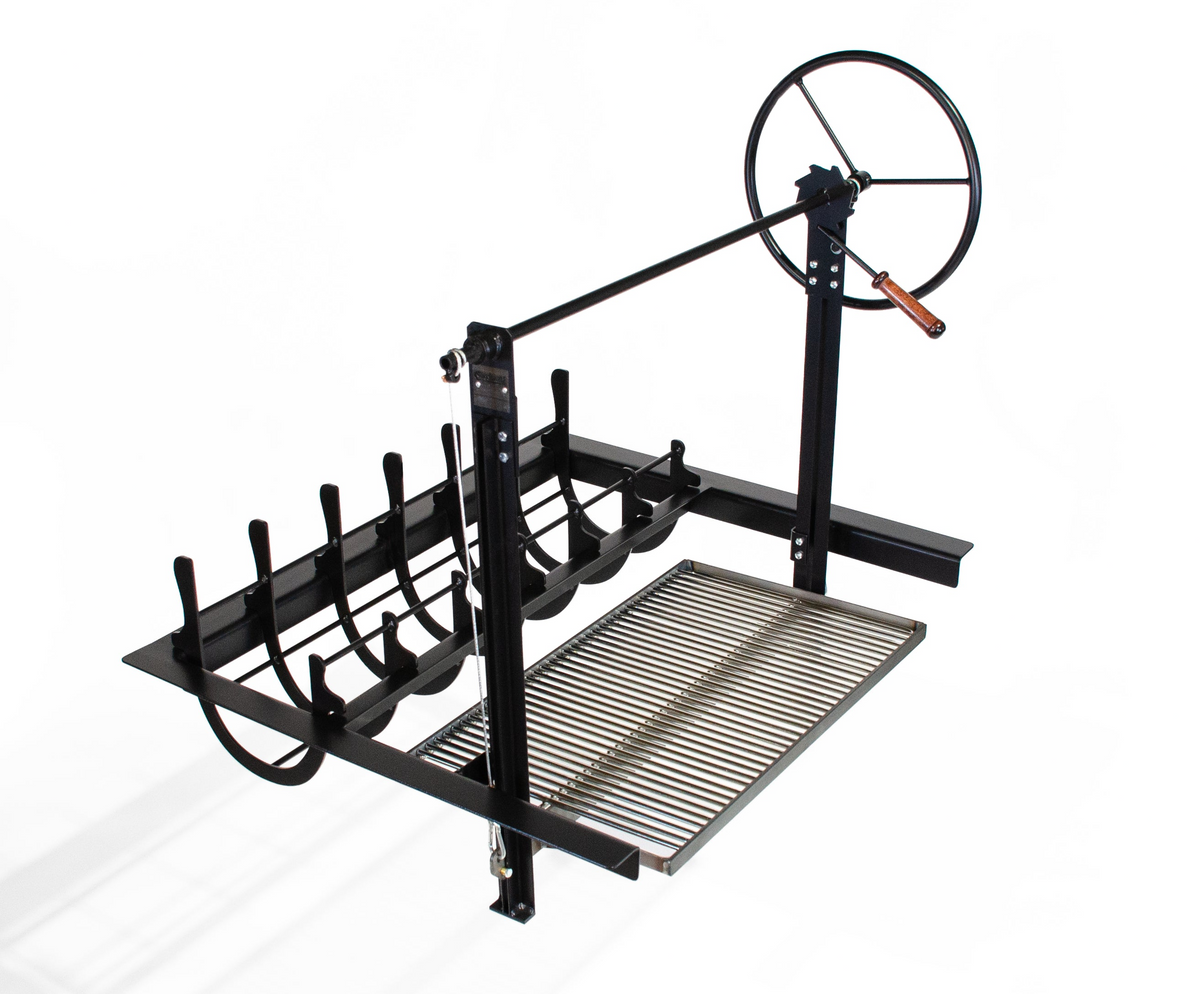
A brasero is a mounted firebox attached to an Argentine grill (parrilla) or Santa Maria grill that allows you to separate your wood/charcoal from your cooking area. You allow your fuel to burn separate and pull embers under the cooking grate as you need them. This allows for the radiant heat to cook your food without fear of flare-ups.
Advantages to cooking with a brasero grill are: continuous ember production separate from cooking area, heat control while feeding new fuel in the brasero which allows for easy long cooks, cleaner cooking, and versatility. This style is popular among Argentines for it's easy control of heat.
A Case Study
Engelbrecht Original Braten 1000
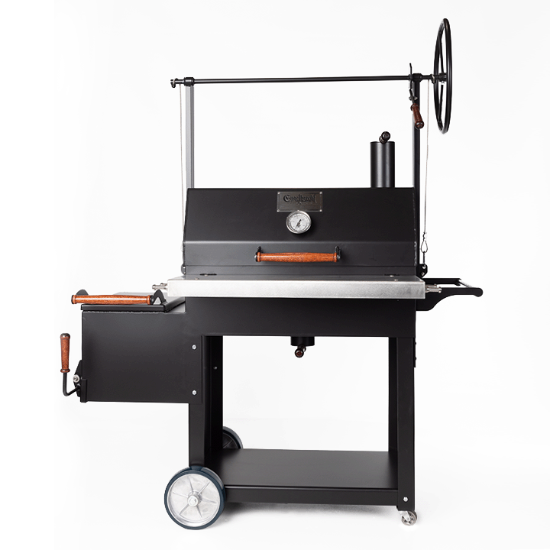
The Original Braten 1000 combines direct ember grilling, enclosed roasting, and offset smoking. Rather than an automated pellet-feed system, it is built around traditional live-fire control.
- 10-gauge steel body
- 3/8-inch solid stainless steel cooking grate
- 3/8-inch solid steel coal grates
- Height-adjustable cooking surface
- Separate offset firebox
- Adjustable airflow dampers
- Stainless steel calibratable thermometer
- Top-loading firebox and ash-removal provisions
- Approximately 29 × 17-inch standard cooking surface (493 square inches)
The adjustable grate lets the cook vary radiant heat without rebuilding the fire. Closing the lid supports enclosed roasting, while the offset firebox supplies heat and smoke for indirect cooking.
Product specifications: https://grillsandcookers.com/products/braten-1000
Which Engelbrecht Wood-Fired Grill Is Right for You?
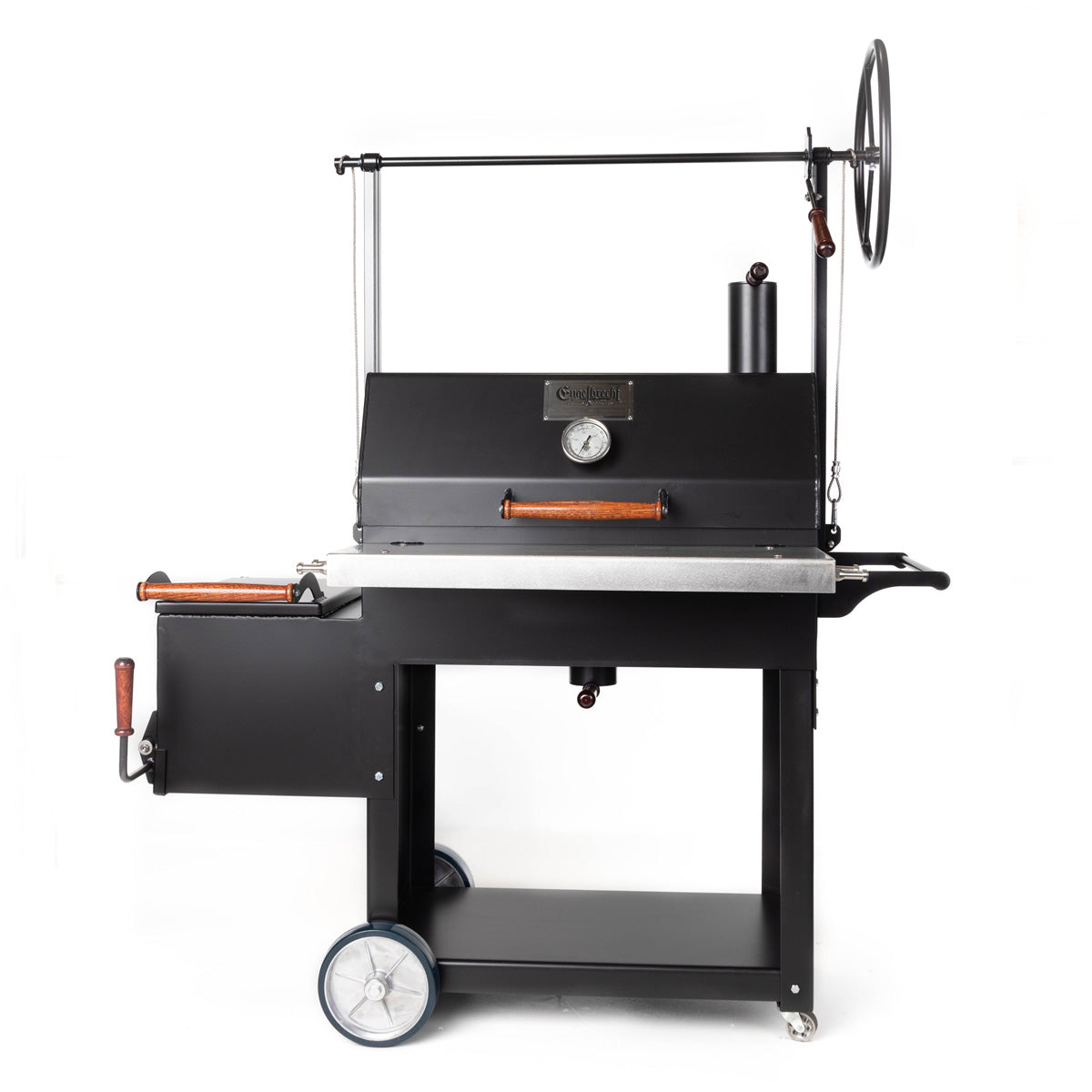
Gen V 1000 Series Original Braten
For home cooks who want adjustable-grate grilling, enclosed roasting, and offset smoking in one appliance.

Stahlkammer 2000
For cooks who need a larger, heavy-duty wood-fired cooking system. Review current model capacity and configurations before purchase.
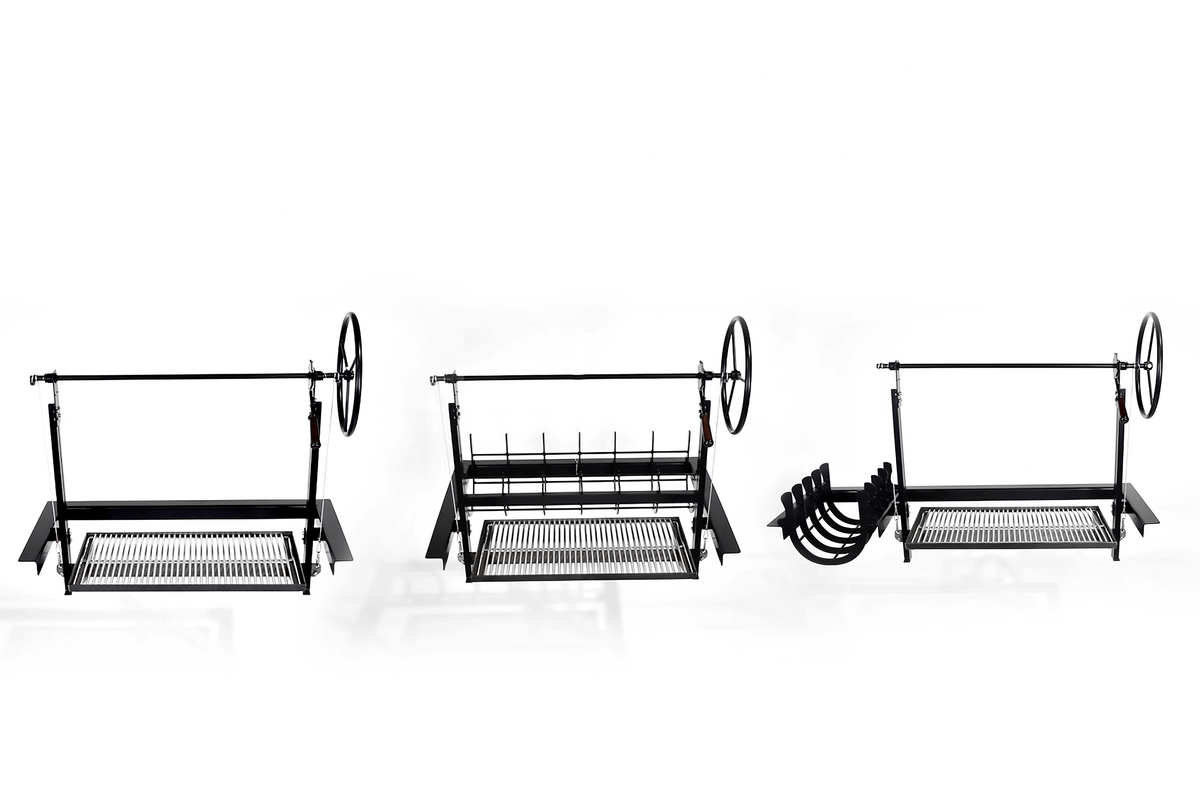
Engelbrecht Parrilla Grills
For traditional Argentine-style grilling, adjustable cooking height, and hardwood ember management.

Engelbrecht Campfire Grills
For a more portable, straightforward approach to cooking over a campfire or open hardwood fire.
FAQ section
Optional topic
What is the best grill for cooking with real wood?
It depends on the cooking method. Look for a purpose-built firebox and adjustable grate for direct ember cooking; consider an enclosed hybrid with an offset firebox if you also want roasting and smoking. For backyard cooks seeking several cooking methods in one appliance, the Engelbrecht 1000 series offers a multifunction design.
Are pellet grills considered wood-fired grills?
Yes. They burn wood-based fuel, but differ from traditional log-burning grills in fuel format, combustion system, and fire management.
Can you burn hardwood logs in any grill?
No. Burn whole logs only in equipment specifically designed and approved for them. The firebox and supports must withstand the weight and concentrated heat of logs over repeated use; unsuitable equipment may deform or suffer component damage, creating a safety hazard.
Santa Maria grill vs. Argentine parrilla?
Both can use adjustable grates and hardwood embers. Santa Maria cooking is associated with California barbecue; Argentine systems may feature braseros and V-shaped grates.
Is thicker steel always better?
Not necessarily. Thickness, design, reinforcement, heat conduction, and serviceability all matter. Sufficient steel thickness and sound construction can help distribute localized heat and resist deformation and oxidation-related wear, while excessive thermal mass may increase the time and fuel needed to heat the cooker. Evaluate the complete design rather than thickness alone.
Can a wood-fired grill be a smoker?
Yes, if it has suitable indirect-heat and smoke-flow design, such as an enclosed chamber with an offset firebox.
Does real wood taste better than pellets?
Whole-log and pellet fires can create different heat and smoke-exposure profiles. A well-managed whole-log fire may produce a more pronounced smoke character, strong radiant searing, and a distinctive crust or bark, depending on the cooker and technique. Engelbrecht customers often describe a preference for these results. Pellet grills can also develop flavorful bark, char, and smoke rings; a smoke ring alone does not measure smoke flavor or prove one cooking method is superior. See “How Whole-Log Hardwood Cooking Influences Flavor and Texture.”
What wood should I use?
Use seasoned, untreated cooking hardwoods such as oak, hickory, maple, and appropriate fruitwoods. Avoid painted, pressure-treated, contaminated, or resinous wood.
How do I learn the art of wood-fire cooking?
Begin with seasoned hardwood or quality lump charcoal and cook often. Experiment with coal placement, damper settings, grate height, and cooking time while observing the flavor and texture of the food. Repetition builds an instinct for managing a live fire—and the freedom to develop your own cooking style.
Are wood-burning grills difficult to use?
They require more active fire management than most automated pellet grills. On appropriately designed enclosed Engelbrecht models, experienced users can regulate combustion and extend burns through fuel loading and upper and lower damper adjustments. Like a wood stove, performance depends on managing draft and air exchange; these grills still require safe supervision.
Are Engelbrecht grills made in the United States?
Engelbrecht manufactures grills primarily in Paxton, Illinois, with components also produced in Indiana, Pennsylvania, and other parts of Illinois. Confirm model-specific sourcing when needed.
What defines a premium wood-fired grill?
Look for durable construction, effective heat control, useful cooking surfaces, serviceability, clear specifications, and independent testing.

Choosing a Wood-Fired Grill for the Long Term
The right wood-fired grill fits the way you want to cook. Pellet grills may be excellent for convenience and automation. A traditional wood-burning grill appeals to cooks who want to build the fire, manage embers, and control radiant heat. Compare construction, fuel compatibility, grate design, cooking capacity, and long-term manufacturer support.
At Engelbrecht Grills and Cookers, we build equipment for people who want to participate in the fire, not simply set a temperature.
Real wood. Real fire. Built for the art of cooking.
Sources and Further Reading
AmazingRibs — Original Braten 1000 review: https://amazingribs.com/ratings-reviews/grill-smoker-combo/engelbrecht-grills-and-cookers-1000-series/
AmazingRibs — Stahlkammer 2000 review: https://amazingribs.com/grill-smoker-combination-grill-smoker-pig-or-lamb-roaster-drop-ins/engelbrecht-grills-and-cookers/
AmazingRibs — Review awards and medals: https://amazingribs.com/ratings-reviews/about-our-reviews-and-medals/
Engelbrecht — Braten 1000 specifications: https://grillsandcookers.com/products/braten-1000
Engelbrecht — Parrilla collection: https://grillsandcookers.com/collections/parrilla-collection
Editorial disclosure: This guide was developed with AI assistance and technically reviewed by the Engelbrecht Grills team, including Chris Engelbrecht.
Bobby Flay’s Barbecue Addiction — publisher and book excerpt: https://www.penguinrandomhouse.com/books/50259/bobby-flays-barbecue-addiction-by-bobby-flay-with-stephanie-banyas-and-sally-jackson/